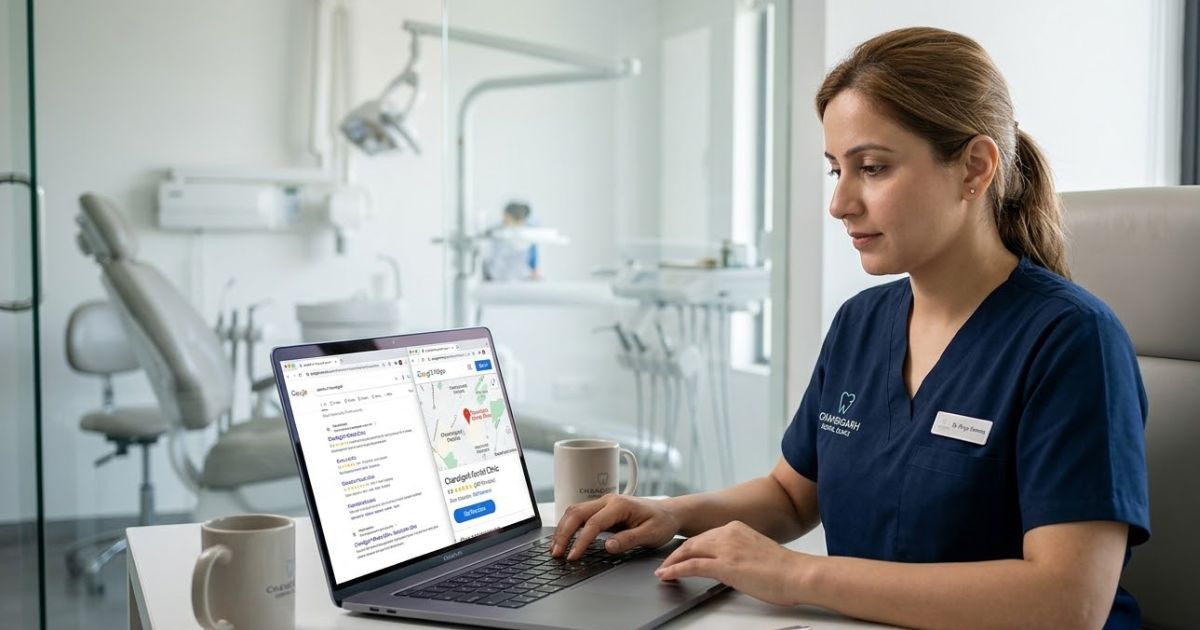

Your Google Business Profile gets patients to click. Your website either converts them into a booking or loses them to the competitor they visit next.
Most dental websites are built by designers who understand how a site should look, not by SEOs who understand how a site should rank. The result is a website that looks professional but is invisible to Google for most of the searches that matter.
This checklist covers every technical, on-page, and structural fix that moves a dental website up in local search results. Work through it section by section. Every unchecked box is a patient enquiry you are currently not getting.
This checklist is part of our complete Local SEO for Dentists series.
Technical Foundations
The things Google needs to work before anything else matters
| Check | Why It Matters | Priority |
|---|---|---|
| Website loads in under 3 seconds on mobile | Slow loading is the single biggest cause of patients bouncing before they book. Google also uses page speed as a direct ranking factor. | Critical |
| Site is fully mobile responsive | Over 70% of ‘dentist near me’ searches happen on a mobile device. A site that is hard to use on a phone loses most of its potential patients before they read a word. | Critical |
| HTTPS secure connection (padlock visible) | Google penalises non-HTTPS sites. Patients will not enter their contact details on a site their browser flags as insecure. | Critical |
| Google Search Console set up and verified | Without Search Console you cannot see which searches bring patients to your site, which pages rank, or whether Google has found any crawl errors. | Critical |
| Google Analytics 4 installed and tracking | Tells you how many patients visit your site, which pages they view, and whether they reach your contact or booking page. | Critical |
| No broken links or 404 errors | Broken links waste Google’s crawl budget and send patients to dead ends. Check monthly with Screaming Frog or Ahrefs. | High |
| XML sitemap submitted to Google Search Console | Helps Google find and index every page on your site, especially new service pages you add. | High |
| Robots.txt file is not blocking important pages | A misconfigured robots.txt can accidentally block your entire site from Google. Check by visiting yourdomain.com/robots.txt. | High |
| No duplicate content issues between pages | If your crown page and your bridge page have near-identical text, Google does not know which one to rank. Each service page needs genuinely unique content. | High |
| Core Web Vitals passing in Search Console | Google’s page experience signals. LCP, FID, and CLS scores affect your ranking directly. Check in Search Console under Experience. | High |
NAP Consistency and Local Signals
Name, address, and phone number must be identical everywhere
| Check | Why It Matters | Priority |
|---|---|---|
| Clinic name, address, and phone number in plain text on every page (typically in the footer) | Google cross-references your NAP on your website against your GBP listing and every other directory. Inconsistency is a local ranking signal that works against you. | Critical |
| NAP format matches your Google Business Profile exactly | ‘St.’ vs ‘Street’, ‘Suite 2’ vs ‘#2’, ‘Dr’ vs ‘Dr.’ all register as different businesses to Google’s algorithm. One format, used everywhere, without exception. | Critical |
| Local phone number with area code (not a national 0800 number) | A local number signals genuine local presence. A national number weakens your local relevance signal. | High |
| Embedded Google Map on your contact page | Reinforces your location to Google and helps patients navigate to your clinic. Use an embed from Google Maps, not a static image. | High |
| Full clinic address visible on contact page in plain crawlable text | Google reads and indexes text. An address in an image or embedded in a graphic cannot be read by Google’s crawler. | High |
| LocalBusiness schema markup on homepage (MedicalOrganization preferred for dental) | Structured data tells Google exactly what your business is, where it is, and what it does in machine-readable format. MedicalOrganization schema carries stronger YMYL trust signals than generic LocalBusiness. | High |
| Opening hours in schema markup matching your GBP hours exactly | Any mismatch between your schema hours and your GBP hours is a consistency signal that weakens local trust. | Medium |
Homepage Optimisation
The page that sets your local relevance for Google
| Check | Why It Matters | Priority |
|---|---|---|
| H1 heading includes your primary keyword and city: e.g. ‘Dentist in [City]’ or ‘[City] Dental Clinic’ | The H1 is the strongest on-page signal for your primary keyword. Most dental homepages use the clinic name alone, which has no keyword value. | Critical |
| Title tag includes clinic name, keyword, and city: e.g. ‘[Clinic Name] | Dentist in [City]’ | The title tag appears in Google search results and is one of the most weighted on-page ranking signals. 60 characters maximum. | Critical |
| Meta description is written to convert clicks, not just describe the page | The meta description does not directly affect ranking but it affects click-through rate. ‘Award-winning dental clinic in [city]. Welcoming new patients. Book online today.’ outperforms ‘We are a dental clinic offering a range of dental services.’ | High |
| Homepage mentions your city and key nearby areas naturally in the body text | Geographic terms in your body content reinforce local relevance. Write naturally for the reader but ensure your city appears in the first paragraph. | High |
| Primary call to action (book appointment / call now) is visible without scrolling on all devices | Every patient who lands on your homepage intending to book should be able to take that action immediately. A CTA buried below the fold loses patients who do not scroll. | Critical |
| Homepage lists key treatments with brief descriptions and links to service pages | This gives Google a content map of your services and gives patients a reason to explore beyond the homepage. | High |
| Trust signals visible on homepage without scrolling: qualifications, years in practice, number of patients, accreditations | Dental patients assess trustworthiness before they read a word. Credentials, registration body logos, and years of experience visible immediately build the confidence needed to book. | High |
Individual Service Pages
The most important structural decision on a dental website
This section is the most common gap on dental websites. Most clinics have a single ‘Services’ page listing everything they offer. That page cannot rank for individual treatment searches. It is competing for every dental keyword simultaneously and winning none of them.
Every major treatment needs its own dedicated page. This is not optional if you want to rank for treatment-specific searches.
| Check | Why It Matters | Priority |
|---|---|---|
| Each major treatment has its own standalone page (not just a section on a combined services page) | A page titled ‘Dental Implants in [City]’ can rank for ‘dental implants [city]’. A section called ‘Implants’ on a general services page cannot. | Critical |
| Each service page H1 includes the treatment name and city: e.g. ‘Dental Implants in [City]’ | The H1 is the primary keyword signal for that page. Without the city, you are competing globally rather than locally. | Critical |
| Each service page title tag follows the formula: ‘[Treatment] in [City] | [Clinic Name]’ | Consistent, treatment-specific title tags ensure each page targets a specific local search without competing with your other pages. | Critical |
| Each service page has at least 400 words of genuinely useful, unique content | Thin service pages do not rank. A page for dental implants that only has two paragraphs will never outrank a competitor with a detailed, helpful guide to the treatment. | High |
| Service pages explain the treatment process step by step | Patients research before they book. A page that explains what happens at each appointment, how long treatment takes, and what to expect during recovery answers the questions patients are searching. | High |
| Service pages include FAQs specific to that treatment | FAQ content targets long-tail question searches and can earn featured snippet positions. ‘How long do dental implants last?’, ‘Is Invisalign painful?’, ‘How many sessions does teeth whitening take?’ are all searched questions with low competition. | High |
| Service pages include a clear call to action and booking link or phone number | Every service page is a landing page for a patient who has searched that specific treatment. The path from reading to booking must be a single click. | Critical |
| Dental implant page, cosmetic dentistry page, and orthodontics page exist as separate pages | These three treatment areas represent some of the highest-value dental searches. Each needs a dedicated page to rank competitively. | Critical |
| Emergency dentistry page exists and is accessible from the homepage navigation | Emergency searches have extremely high intent. A patient in pain who finds your emergency page and can call immediately will book on the spot. | High |
| Nervous patient or dental anxiety page exists as a standalone page | One of the most underserved dental search categories. Almost no clinics have this page. A patient searching ‘nervous patient dentist [city]’ who finds a page written specifically for them converts at an exceptionally high rate. | High |
Location and Area Pages
Expand your ranking reach beyond your immediate street
| Check | Why It Matters | Priority |
|---|---|---|
| Contact page includes full address, embedded map, phone, email, and booking link all in one place | Every patient who reaches your contact page is ready to act. All the information they need to book must be on one page without hunting for it. | Critical |
| Contact page mentions nearby landmarks and transport links in natural language | Patients often search relative to landmarks they know. ‘Near [hospital]’, ‘opposite [shopping centre]’, ‘5 minutes from [station]’ also rank for those proximity searches. | High |
| Separate area pages created for key suburbs and neighbourhoods you serve | A page titled ‘Dentist Serving [Suburb], [City]’ ranks for ‘[suburb] dentist’ searches from patients in that area who may not know your clinic’s immediate street. | High |
| Area pages have unique, genuinely useful content about serving patients from that specific area | Do not create thin location pages that just swap the suburb name. Each area page should mention travel time from that area, parking options, and why patients from there specifically choose your clinic. | High |
| If part of a dental group, each location has its own dedicated page on the website | Google ranks individual locations, not groups. Each clinic location needs its own URL, its own content, its own NAP, and its own GBP listing. | Critical |
Trust, Credentials, and YMYL Signals
Dental is a healthcare service. Google holds it to a higher standard.
YMYL stands for Your Money or Your Life. Google classifies dental websites under this category because dental decisions directly affect patient health. YMYL pages are held to a higher quality and trust standard in Google’s ranking systems. This section covers the signals that build that trust.
Know More: What is YMYL in SEO?
| Check | Why It Matters | Priority |
|---|---|---|
| Every dentist on the team has a dedicated profile page with name, qualifications, registration number, and photo | Google’s quality raters look for genuine expertise. Named, credentialled dentists with verifiable qualifications are a strong YMYL trust signal. | Critical |
| Professional registration body membership displayed (GDC, ADA, BDA, or equivalent for your country) | Official registration logos and membership numbers let patients and Google verify your legitimacy as a healthcare provider. | High |
| Any specialist qualifications, postgraduate training, or certifications mentioned on relevant service pages | A page about dental implants written by or attributed to a dentist with a named implant qualification ranks better and converts better than an anonymous page. | High |
| Patient testimonials or case studies on service pages with treatment-specific detail | A testimonial on your implants page from a patient describing their implant journey is stronger than a generic review on your homepage. | High |
| Before and after gallery exists with treatment labels and patient consent statements | Visual proof of clinical results. Cosmetic patients specifically want to see this before they book. Consent statements protect you legally and signal professionalism. | High |
| Privacy policy and terms pages exist and are linked in the footer | Required legally in most countries for any website collecting patient data. Also a basic trust signal that Google factors into site quality assessment. | High |
| Contact form includes a clear explanation of how patient data is handled | Healthcare patient data is sensitive. A clear, honest statement about how enquiry data is used builds trust and is legally required under GDPR and equivalent regulations. | High |
Content and Blog Strategy
Long-term traffic from patients researching before they book
| Check | Why It Matters | Priority |
|---|---|---|
| Blog or articles section exists on the website | Educational content earns rankings for question-format searches, builds trust with patients who are researching, and earns backlinks from other websites. | High |
| Blog covers patient questions specific to your treatments: ‘How long does a root canal take?’, ‘Is Invisalign painful?’, ‘What to eat after tooth extraction’ | These are exactly what patients search before booking. A clinic that answers these questions owns the patient’s research journey before they even pick up the phone. | High |
| FAQ page exists covering the most common patient questions across all treatments | FAQPage schema on this page targets featured snippet positions for question-format dental searches, putting your answer above all organic results for that question. | High |
| Symptom-based content exists: ‘sensitive teeth treatment’, ‘gum bleeding dentist’, ‘cracked tooth what to do’ | Patients in pain search by symptom, not by treatment name. Content that answers symptom searches captures patients at the point of highest urgency. | High |
| Content is attributed to a named dentist with credentials, not published anonymously | Named, credentialled authorship is a YMYL trust signal. Anonymous dental content ranks lower than content attributed to a qualified professional. | High |
| Old blog posts are updated when treatment information or pricing changes | Outdated dental information is a trust and accuracy problem. A post from 2019 about implant costs that still ranks but has wrong prices damages credibility and potentially misleads patients. | Medium |
Booking and Conversion Elements
Turning website visitors into booked patients
| Check | Why It Matters | Priority |
|---|---|---|
| Phone number is click-to-call on mobile (tel: link format) | A patient on their phone who wants to call should be able to do so with one tap. A static phone number they have to manually dial loses patients. | Critical |
| Online booking or appointment request form exists and works correctly | Patients increasingly expect to book without calling. A broken or missing booking form is a conversion barrier that costs appointments. | Critical |
| Booking CTA visible on every page, not just the homepage and contact page | A patient reading your implants page who decides to book should not have to navigate back to the homepage to find the booking button. | High |
| Live chat or WhatsApp contact option available (especially for nervous patients) | Some patients who are anxious about calling prefer to ask questions in writing first. A chat option reduces the barrier to first contact for this patient group. | Medium |
| New patient information clearly explained: what to bring, what to expect, parking, check-in process | A first-time patient has anxiety about the unknown. A clear ‘your first visit’ page or section removes barriers and increases the likelihood they follow through on booking. | High |
| Appointment confirmation page or thank-you page set up as a Google Analytics conversion goal | Without conversion tracking you cannot measure how many website visitors become actual patient enquiries. This is the most important metric on your website. | High |
Priority Order: Where to Start
If your website has multiple gaps, fix them in this order:
Critical first: Page speed, mobile responsiveness, HTTPS, GBP-matching NAP in footer, H1 with keyword and city on homepage and all service pages, individual service pages for every major treatment, click-to-call phone number, working booking form.
High next: Schema markup, meta descriptions, trust signals and credentials, FAQ content, area pages for key suburbs, conversion tracking set up in Google Analytics.
Medium last: Blog content, chat options, updating old posts, additional schema types.
Read Next in This Series
- The tactics that fill appointment books: Proven Local SEO Strategies for Dentists
- Complete GBP optimisation: Google Business Profile for Dentists
Getting patient reviews consistently: How to Get More Patient Reviews for Your Dental Clinic
Final Thought
A dental website that ranks well is not a design project. It is a structure project. The right pages, the right headings, the right schema, the right trust signals, all pointing Google clearly toward what your clinic does, where it is, and why it should be trusted.
Work through this checklist once, fix every gap, and then revisit it every six months. Dental SEO is not a one-time task. The clinics that stay at the top of the Map Pack are the ones who maintain their advantage, not just the ones who built it.
Explore for more such info – thejatinagarwal.in and for more guides covering specific Google Business Profile issues, troubleshooting steps, and local SEO strategies, browse our complete Local SEO resource hub.