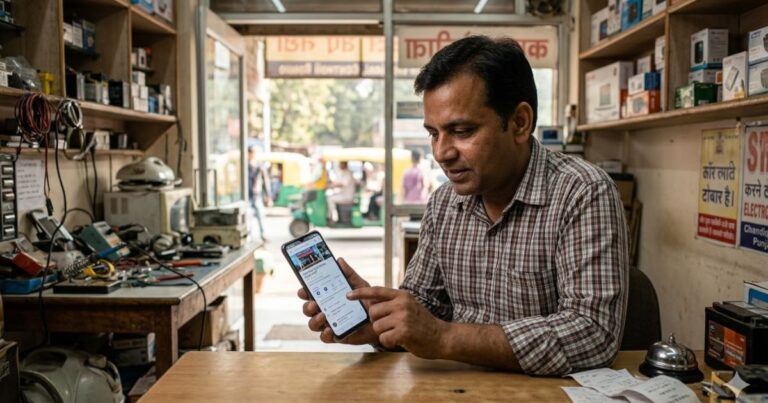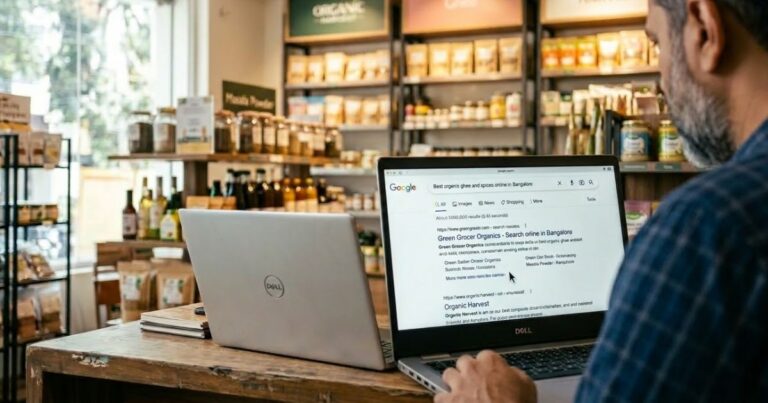

The short answer is yes. A small business can absolutely do SEO without hiring an agency, and for a large number of small businesses, doing it yourself is not just possible but actually the smarter first move.
The longer answer is that DIY SEO and agency SEO are not the same thing. They cover different ground, require different inputs, and suit different stages of a business’s online presence. Understanding which one you actually need right now saves you either wasted money on an agency or wasted effort on the wrong tasks.Before getting into what you can do yourself, it helps to understand what local SEO actually is and how it differs from the broader SEO you might have read about elsewhere. Most small businesses only need the local version, which is also the version most suited to DIY.
What DIY SEO Can Realistically Achieve
Let’s be honest about what a business owner doing their own SEO, without technical knowledge, without dedicated time, and without professional tools, can and cannot achieve.
| Task | DIY Feasibility |
|---|---|
| Google Business Profile setup and optimisation | Fully achievable. This is the single highest-impact action in local SEO and requires no technical knowledge whatsoever. |
| NAP consistency across directories | Fully achievable. Getting your name, address, and phone number consistent across directories is manual work but needs no expertise. |
| Review generation | Fully achievable. Asking customers for Google reviews and responding to them requires no tools and no agency. |
| Basic on-page SEO for your website | Achievable with a little learning. Title tags, address in the footer, mobile-friendliness , these are straightforward fixes most business owners can handle. |
| Content for service pages | Achievable if you are willing to write. A dedicated page per service with your city in the heading covers the majority of local keyword targeting a small business needs. |
| Technical SEO | Difficult without expertise. Site speed, schema markup, crawl errors, and canonical tags are areas where errors are easy to make and the consequences are real. |
| Competitive backlink building | Difficult without a strategy. Building quality backlinks requires outreach, relationships, and content worth linking to. |
| Ranking for high-competition keywords | Very difficult without domain authority. A new domain cannot outrank established competitors for competitive terms through DIY effort alone. |
For most local small businesses, the DIY-achievable tasks cover 70 to 80% of what actually drives local search visibility. The tasks that need professional help are real but they come after the fundamentals, not before.
The DIY Local SEO Playbook: What to Do and in What Order
These tasks are sequenced by impact, not by difficulty. Do them in this order.
Step 1: Claim and Complete Your Google Business Profile
Go to business.google.com and claim your listing. Once claimed, fill in every field with the same level of detail covered in the advanced GBP optimisation guide , categories, services, description, photos, attributes, everything.
At a minimum before you move to the next step:
- Business name exactly as it appears on your signage and website
- Complete address matching your website footer exactly
- Local phone number with area code
- Website URL
- Opening hours for every day including holidays
- Primary and secondary categories relevant to your business
- Business description using your main service and city naturally
- Every service you offer added in the Services section with a description
- At least 10 photos covering exterior, interior, team, and work
Time investment: First-time setup takes 2 to 3 hours done properly. Ongoing maintenance is 30 minutes a week for posting and responding to reviews.
Step 2: Get Your NAP Consistent Everywhere
NAP stands for Name, Address, Phone number. Google cross-references your business details across every directory it can find. Inconsistencies, ‘Street’ on one site and ‘St.’ on another, signal to Google that these might be different businesses or that your information is unreliable.
Decide your exact NAP format once. Then check and update every platform where your business appears: JustDial, Sulekha, IndiaMart, Facebook, Apple Maps, Bing Places, and any local directories for your city or industry.
Do not update your NAP on one platform and forget the others. Partial consistency is almost as damaging as no consistency. Make a list of every platform, update them all, and save it so you can update everything any time your details change.
Step 3: Build Your Google Reviews Systematically
Reviews are a direct local ranking factor. More reviews, recent reviews, and reviews with relevant keywords in the text all improve your Map Pack position. The complete system for how to ask, what to say, and how to respond to reviews works the same whether you run a restaurant, a clinic, or a service business.
The DIY review system is simple:
- Generate your direct Google review link from your GBP dashboard
- Ask every satisfied customer in person at the point of completion
- Send a follow-up WhatsApp message with the direct link
- Respond to every review, positive and negative, within 24 hours
- Never incentivise reviews or ask specifically for positive ones
A business asking every customer every day will outpace a competitor with a better website but no review strategy within 3 to 4 months.
Step 4: Fix the Basic On-Page SEO on Your Website
You do not need to understand technical SEO to fix the most impactful on-page elements. These are the changes that move the needle most for a local business:
Homepage title tag: Should read ‘[Business Name] | [Your Service] in [Your City]’. If your site is on WordPress, the Yoast or RankMath plugin lets you edit this without touching code.
H1 heading on your homepage: The main heading should include your service and city. ‘Accounting Services in Pune’ rather than just your business name.
Address in plain text in the footer: Your full address and phone number should appear in the footer of every page in plain crawlable text, not in an image or embedded in a graphic only.
Mobile responsiveness: Open your website on your phone. If anything looks broken or is hard to tap, this needs fixing. Over 70% of local searches happen on mobile.
Page speed: Go to pagespeed.web.dev and enter your URL. If your mobile score is below 50, your site is losing visitors and rankings. Most issues causing slow scores are covered in the
technical SEO checklist , the fixes for small business websites specifically are in the first two sections.
Step 5: Create One Page Per Major Service
This is the most overlooked DIY SEO action for small businesses. If all your services live on a single page, you are competing for every service keyword simultaneously and ranking well for none of them.
Create a separate page for each major service. A CA firm should have separate pages for Income Tax Returns, GST Filing, Company Registration, and Audit Services. A salon should have separate pages for Hair Colour, Hair Treatment, Bridal Packages, and Nail Art.
Each page title should follow the formula: ‘[Service] in [City] | [Business Name]’. If you want to understand how to find the right keywords for each page, local SEO keyword research for small businesses covers exactly how to do this without paid tools.
Each page needs at least 300 words explaining the service, your approach, and why customers choose you. End every page with your contact details and a clear call to action.
Step 6: List on the Key Indian Business Directories
Beyond Google, these are the directories worth listing on for an Indian small business:
- Bing Places for Business (bingplaces.com) , free, feeds Microsoft and Yahoo search
- Apple Maps via Business Connect (mapsconnect.apple.com) , free, all iPhone users
- JustDial (justdial.com) , free basic listing, paid for priority placement
- Sulekha (sulekha.com) , relevant for service businesses
- IndiaMart (indiamart.com) , relevant for B2B and product businesses
- Facebook Business Page , functions as a citation and secondary review platform
- Your city’s Chamber of Commerce website , locally relevant citation
Getting listed across these directories is the off-page side of local SEO. If you want to understand how on-page, off-page, and technical SEO each contribute differently to your overall visibility, that breakdown is worth reading before you decide where to focus your time.
When DIY SEO Is Not Enough
There are situations where doing it yourself hits a ceiling and professional help genuinely accelerates results.
| Situation | Why Professional Help Adds Value |
|---|---|
| You have done the basics but still not ranking | Your GBP is complete, NAP consistent, 30 plus reviews, and you are still not in the Map Pack. This usually means a technical issue on your website, a domain authority problem, or a competitive market that needs more aggressive content and link building. |
| You are in a high-competition metro market | In Delhi, Mumbai, Bangalore, and Chennai, competition for local keywords is significantly higher. DIY SEO may plateau faster and professional strategy may be necessary to break through. |
| Your website has technical problems you cannot identify | If Search Console is showing errors, your pages are not being indexed, or your site has crawl issues, a technical SEO professional can diagnose these faster than months of self-research. |
| You want to scale content across many service pages or locations | Creating 20 or 30 optimised pages systematically requires a content strategy and execution capacity that is difficult to maintain while running a business. |
| You need competitive backlink building | Once on-page and local signals are right, the next lever is domain authority through backlinks. This benefits from professional execution. |
One of the most common situations where DIY hits a wall is when your pages appear in Google Search Console but are not showing in actual search results. This specific problem has its own set of causes and fixes that are worth understanding before assuming you need an agency.
How to Choose the Right Agency When You Are Ready
When you do reach the point of hiring an agency, having done DIY SEO first is a genuine advantage. You will know enough to evaluate what they propose and spot the red flags immediately.
- Red flag: They guarantee specific rankings. Google controls rankings. No ethical SEO professional guarantees them.
- Red flag: They promise results in 30 days. For a website with no existing authority, meaningful organic results in 30 days are not achievable through legitimate means.
- Red flag: They will not give you access to your own Google Search Console and GBP. Your data belongs to you.
- Green flag: They ask about your business goals before talking about keywords and rankings.
- Green flag: They explain their work in plain language without jargon.
- Green flag: Their reports connect to business outcomes, not just keyword rankings. Understanding the difference between what GSC data actually means versus what looks good on a report will help you evaluate any agency’s work far more accurately.
The Honest Summary
A small business can do the most impactful local SEO without an agency. Claiming and optimising your GBP, building consistent citations, generating genuine reviews, and creating basic on-page content for your service pages , done properly, these deliver real visibility improvements that most small businesses have never achieved despite years of operation.
The ceiling of DIY SEO is real but it is higher than most agencies will tell you, because admitting it means admitting that many of their clients do not actually need them yet. The deeper reasons why so many Indian small businesses have not started at all have less to do with SEO being difficult and more to do with how it has been sold to them.
Start with the DIY playbook. Get the basics right. Measure what changes. Then make an informed decision about whether professional help is the right next step based on where you have plateaued, not based on a cold sales call.
The test before hiring any SEO agency:
- Before signing with an agency, do this first.
- Spend 2 hours completing your Google Business Profile fully.
- Ask your last 10 happy customers for a Google review.
- Add your city and main service to your homepage title tag.
- Wait 60 days. Check how your GBP impressions and calls change.
If those 2 hours of free work moved the needle, imagine what consistent professional effort compounds into over 12 months.
If nothing changed after 60 days, now you know you need professional help to diagnose what is holding you back.
This test costs nothing. It tells you exactly what you need to know before committing to a monthly retainer.
Explore for more such info – thejatinagarwal.in and for more guides covering specific Google Business Profile issues, troubleshooting steps, and local SEO strategies, browse our complete Local SEO resource hub.