
12 strategies restaurant owners are using right now to rank higher on Google, fill more tables, and beat every competitor in their area
Every strategy here is actionable today. No paid tools required. No agency needed.
The restaurant two streets away from you, the one that is always packed while you are half empty on a Tuesday night, is probably not doing better food than you. They are not spending more on Instagram ads. They did not get lucky with a viral post.
They are simply showing up higher on Google when hungry people nearby search ‘restaurant near me’. And that one difference is sending them hundreds of customers every single month that could have been yours.
Local SEO for restaurants is one of the highest-return investments you can make in your business. A person who searches ‘best Italian restaurant in [your city]’ is already hungry, already ready to spend money, and already holding their phone waiting to call or book. Your only job is to show up in front of them before your competitor does.
This guide gives you 12 proven strategies to make that happen. Every single one of these works. Every single one is free or nearly free to implement. And every single one is something you can start doing today.
Why Local SEO Is the Highest-ROI Marketing Channel for Restaurants
Before the strategies, let us be clear about why this matters so much specifically for restaurants.
Think about the difference between someone who sees your Instagram ad versus someone who searches ‘restaurant near me’ on Google. The Instagram person was not thinking about food until your ad interrupted them. They might like your post and forget about it in 30 seconds. The Google searcher is actively hungry, actively looking, and actively ready to make a decision right now.
That difference in intent is everything. Local search traffic converts to real customers at a dramatically higher rate than almost any other channel, because you are reaching people at the exact moment they are ready to eat.
The numbers behind this: Nearly half of all Google searches have local intent. 76% of people who search for a restaurant on their phone visit one within 24 hours. And 28% of those local searches result in a purchase the same day. No other marketing channel comes close to those conversion numbers.
If you want to understand how local SEO fits into the bigger picture of online marketing for your restaurant, read our Local SEO vs Traditional SEO guide – it explains exactly why local search should be your first priority before anything else.
The 12 Proven Strategies
Strategy 1: Claim and Fully Complete Your Google Business Profile
The single biggest ranking factor in local search, and most restaurants have it only half done.
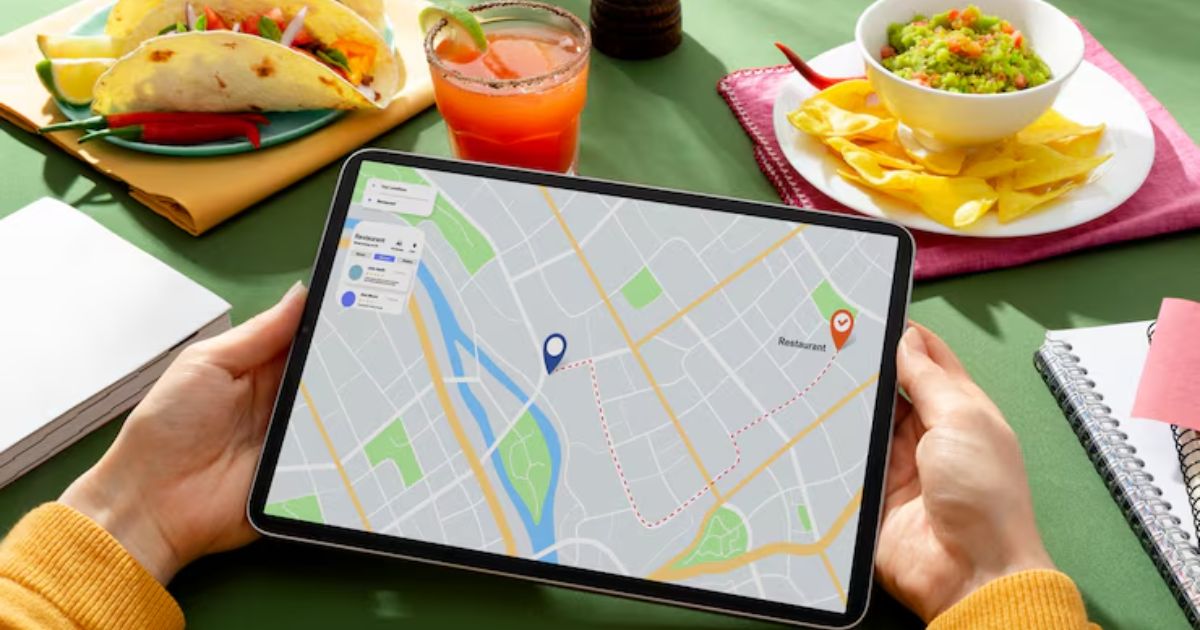
Your Google Business Profile (GBP) is what appears in Google Maps and the Map Pack, those three restaurant listings with photos, ratings, and a call button that appear at the top of results when someone searches for a restaurant near them. If your profile is incomplete, unclaimed, or inactive, you are almost certainly not in those three spots.
Here is what ‘fully complete’ actually means for a restaurant specifically:
- Business name: Your real restaurant name – no keyword stuffing, no adding ‘Best Pizza Austin’ after your name. Just your name.
- Address: Exact address, matching your website and every other platform perfectly
- Phone number: A local area code number – not a national booking line
- Website: Link to your restaurant’s own website, not a third-party delivery platform
- Hours: Every day filled in, including updated holiday hours – nothing loses a customer faster than showing up to find you closed when Google said you were open
- Category: Your primary category should be as specific as possible – ‘Italian Restaurant’, ‘Sushi Restaurant’, or ‘Pizza Restaurant’ rather than just ‘Restaurant’
- Dining attributes: Dine-in, takeaway, delivery, outdoor seating, reservations, wheelchair accessible – fill in every single one that applies
- Menu: Add your full menu with photos. Google displays this directly on your listing.
- Photos: At least 20 real photos – food, interior, exterior, team, atmosphere
Why this works: Google’s algorithm rewards completeness. A fully filled-out profile ranks higher than a partial one, even if the partial profile has more reviews. Completeness is a direct ranking signal.
For a complete deep-dive on GBP optimisation including advanced tactics most restaurants never use, read our full Google Business Profile optimisation guide.
Strategy 2: Choose the Right Primary Category – Then Test It
Most restaurants pick ‘Restaurant’ and stop there. That is like choosing ‘Vehicle’ as your car’s description.
Your primary GBP category is one of the most powerful ranking signals you have. It determines which searches your restaurant is even eligible to appear in.
Google has extremely specific restaurant categories available. Compare the difference:
- ‘Restaurant’ – You are competing with every restaurant in your city for every food-related search
- ‘Italian Restaurant’ – You are competing specifically for people searching for Italian food, and Google shows you for those searches first
- ‘Neapolitan Pizza Restaurant’ – Even more specific, even less competition, even stronger relevance signal for your exact type of food
The more specific your primary category, the stronger your relevance signal for the searches that matter most to you. Always choose the most specific category that accurately describes your restaurant.
Test your category: Search for your top 3 most important keywords, ‘Italian restaurant [your city]’, ‘[your cuisine] near me’, etc. Look at what primary category the top 3 Map Pack results are using. If they are all using a more specific category than you, change yours and watch your impressions over the next 3 weeks.
Strategy 3: Treat Your Menu as an SEO Asset
Your menu is full of keywords that customers search for. Most restaurants never use this.
Here is something most restaurant owners have never thought about: the dishes on your menu are search terms. Real people type ‘wood fired pizza near me’, ‘authentic pad thai [city]’, ‘truffle pasta restaurant [city]’ into Google every single day. If those phrases are on your menu and your website, you have a chance of ranking for them. If they are not, you do not.
Here is how to turn your menu into an SEO asset:
- Upload your full menu to your Google Business Profile, Google indexes this and it becomes searchable content associated with your listing
- On your website’s menu page, write real descriptions for your key dishes, not just the name and price, but a sentence or two describing the ingredients, preparation, and flavour profile
- Use the exact words your customers use, if your dish is described on the menu as ‘Margherita’ but customers search ‘tomato mozzarella pizza’, make sure your description includes both
- Create a dedicated page on your website for your most popular or unique dishes, a page titled ‘Our Wood-Fired Neapolitan Pizzas’ with a full description ranks for people specifically searching that type of food
Why this works: Menus are one of the only places where restaurants have completely unique keyword content that competitors cannot copy, because your dishes are different from theirs. This is underused keyword territory with almost zero competition.
Strategy 4: Build a Review Generation System; Not a One-Off Campaign
Volume, recency, and keywords in reviews all affect your ranking. One review burst does nothing long-term.
Reviews are one of the three most powerful local ranking signals for restaurants. But the way most restaurants approach reviews, posting a sign that says ‘Leave us a Google review!’ and hoping for the best – produces inconsistent, sporadic results that Google’s algorithm does not reward.
What Google rewards is steady, consistent review growth over time. Here is a system that actually works:
- Train your front-of-house staff to ask for reviews at the right moment, when a diner says ‘That was amazing’ or asks to compliment the chef, that is the moment. A simple ‘That really means a lot, if you have a spare 30 seconds, a Google review would help us enormously’ is all it takes.
- Create a QR code that links directly to your Google review page and put it on the bill folder, the table card, and near the exit. Make leaving a review a 15-second action, not a 5-minute search.
- Send a follow-up message if you have customer contact details, a simple text or email 2 hours after the meal saying ‘Thank you for dining with us tonight, we would love to hear what you thought’ with a direct review link
- Respond to every single review within 24 hours, responses are indexed by Google and signal to the algorithm that your business is active and engaged
Never offer discounts, free meals, or incentives in exchange for reviews. Google’s policies explicitly prohibit this and can result in your reviews being removed or your listing being penalised. Genuine, unprompted reviews always outperform incentivised ones anyway, customers can tell the difference.
One more thing about reviews that most guides skip: the words customers use in their reviews matter for your ranking. A review that says ‘best wood-fired pizza in Austin’ helps you rank for ‘wood-fired pizza Austin’. You cannot control what customers write, but you can gently guide them.
The soft prompt: When asking for a review, try: ‘If you feel comfortable, mentioning your favourite dish or what you enjoyed most really helps other diners find us.’ Most customers have no idea what to write in a review, this simple prompt gets you reviews that naturally contain your most valuable keywords.
Strategy 5: Post on Google Every Week Without Fail
Most restaurants do not know Google Posts exist. The ones that do post once and forget. Neither approach wins.
Google Posts are free updates that appear directly on your Google Business Profile in search results. Think of them as a mini social media feed that lives inside Google itself, visible to anyone who sees your listing before they even visit your website.
For a restaurant, Google Posts are an exceptional tool because food content is inherently visual and engaging. Here is a simple weekly rotation:
- Week 1 -f This week’s special: A photo of your weekly special dish with a description and price. Use the dish name as the headline, that text is indexed by Google.
- Week 2 – Behind the scenes: A photo or short video from the kitchen, a new supplier you are working with, or a team introduction. This builds personality and trust.
- Week 3 – Event or offer: An upcoming event, a private dining offer, a limited-time menu item, a happy hour promotion.
- Week 4 – Customer story or milestone: A celebration you hosted, a review you are proud of (quoted with permission), a dish that sold out.
Why this works: Each Google Post is indexed content that Google associates with your listing. A post titled ‘Our New Truffle Mushroom Risotto – Available This Week in [City]’ contains keywords that boost your relevance for related searches. It also signals to Google that your business is active, which is itself a ranking factor.
Strategy 6: Get Listed on Every Food-Specific Directory – Correctly
Citations from food directories carry extra weight because they are highly relevant to your business type.
A citation is any online mention of your restaurant’s name, address, and phone number. Google cross-references your information across the web to confirm your business is real and located where you say it is. For restaurants, there are specific directories that carry significant weight:
- TripAdvisor: Massive domain authority, hugely influential for restaurants specifically. A complete, photo-rich TripAdvisor listing with strong reviews is one of the most valuable citations a restaurant can have.
- Yelp: Still heavily used in the US, particularly for restaurant discovery. Your Yelp listing also feeds Apple Maps results.
- OpenTable / Resy / SevenRooms: If you take reservations through any of these platforms, your listing there is both a citation and a booking channel.
- Zomato: Strong in many markets, particularly useful in urban areas
- Google Maps (via your GBP): Already covered, but worth stating, this is your most important citation
- Facebook Business Page: Another high-authority citation that also serves as a social proof platform
- Your local city tourism website or dining guide: Often overlooked but very powerful for local relevance
The critical rule: your restaurant name, address, and phone number must be absolutely identical on every single platform. ‘The Olive Tree’ on your website but ‘Olive Tree Restaurant’ on TripAdvisor looks like two different businesses to Google’s algorithm. Pick one exact format and use it everywhere without exception.
For a full step-by-step guide to building and auditing your citations, read the NAP consistency section in our Complete Local SEO Guide for Small Businesses.
Strategy 7: Create Neighbourhood and Occasion-Specific Pages on Your Website
Most restaurant websites have a Home, Menu, About, and Contact page. That is the bare minimum. The restaurants ranking at the top have more.
Your website needs dedicated pages that target the specific searches your ideal customers are making. Two types of pages are particularly powerful for restaurants:
Neighbourhood Pages
If your restaurant is in a specific neighbourhood, area, or district that people search by name, create a page that targets that area. For example, if you are in the French Quarter of New Orleans, a page titled ‘French Quarter Restaurants, Authentic Cajun Dining’ targets people specifically searching for dining options in that neighbourhood.
This is especially powerful for restaurants in tourist areas, trendy dining districts, or any area people specifically seek out.
Occasion Pages
People search specifically for restaurants by occasion all the time. Create dedicated pages for:
- Private dining and event hosting, ‘Private Dining Room [City] | Events and Celebrations’
- Romantic dinner – ‘Romantic Restaurants in [City] | Intimate Dining Experience’
- Business lunch – ‘Business Lunch [City] | Quiet Atmosphere, Private Tables’
- Family dining – ‘Family-Friendly Restaurant in [City] | Kids Menu Available’
- Specific dietary needs – ‘Vegan Restaurant [City]’, ‘Gluten-Free Menu [City]’
Each of these pages targets a specific high-intent search. A page titled ‘Private Dining [City]’ ranks for people who are specifically looking to book a private event, one of the highest-value customer searches a restaurant can capture.
Why this works: These pages target long-tail keywords with very low competition and very high conversion intent. Someone searching ‘romantic restaurant for anniversary in Austin’ is not browsing, they are making a booking tonight. Being the first result for that search is worth far more than ranking #5 for the broad term ‘restaurant Austin’.
Strategy 8: Use Your Q&A Section as a Keyword and Conversion Tool
Almost no restaurants touch the Q&A section on their Google Business Profile. This is a significant missed opportunity.
The Questions and Answers section on your Google Business Profile is indexed by Google, appears on your listing, and can be pre-populated by you with your own questions and answers. For a restaurant, this is a customer conversion tool as much as it is an SEO tool.
Here are the questions to pre-load, and how to write the answers for maximum SEO value:
- ‘Do you take reservations?’ Answer: ‘Yes, [Restaurant Name] accepts reservations for lunch and dinner in [City]. You can book online at [website] or call us on [number]. We recommend booking in advance for weekend evenings.’
- ‘Do you have a private dining room for events?’ Answer: ‘Yes, we have a private dining room in [area of city] that seats up to [X] guests, ideal for birthday dinners, corporate events, and celebrations. Contact us at [email] to discuss your event.’
- ‘Is there parking nearby?’ Answer your city-specific parking situation clearly
- ‘Do you cater for dietary requirements?’ Mention vegan, gluten-free, halal, kosher, or whatever applies to your restaurant with specific dishes
- ‘What is the dress code?’ Even if casual, answering this removes a barrier to booking
Why this works: Notice how each answer naturally contains location names, service descriptions, and relevant keywords. Google indexes every word. These answers boost your relevance for searches like ‘private dining room [city]’, ‘restaurant with parking [city]’, and ‘vegan options [city]’ – all without adding a single word to your website.
Strategy 9: Optimise Your Photos Like a Marketing Asset, Not an Afterthought
On Google Maps, a stunning photo can make someone choose your restaurant in 3 seconds. A mediocre photo can lose them just as fast.
For restaurants specifically, photos are more important than almost any other type of business. Food is a visual decision. Before a customer ever tastes your food, they eat it with their eyes, and that first experience happens on Google, not in your restaurant.
Here is the restaurant-specific photo strategy:
- Hero food shots: 5 to 10 stunning photos of your best dishes. Natural light, real food (not styled props), clean backgrounds. These are the most-viewed photos on any restaurant GBP listing.
- Atmosphere shots: The feel of your restaurant at your best service – warm lighting, full tables, happy guests (with permission). This is what customers are really buying when they choose a restaurant – an experience, not just food.
- Exterior shots: Clear photos of your frontage, signage, and entrance, taken in daylight and at night if you have attractive lighting. Customers use these to find you.
- Menu photos: Photographs of your actual printed menu. Some customers want to browse the menu before deciding to visit.
- Behind the scenes: A chef plating a dish, the kitchen in action, a bartender at work. These build authenticity and trust.
Upload consistently: Add 2 to 3 new photos every week. Google rewards ongoing photo activity, it is a freshness signal. Set a reminder every Monday to upload photos from the previous week’s service. After 3 months you will have 30 to 40 photos that tell a complete, compelling visual story of your restaurant.
Before uploading any photo, rename the file to something descriptive. Instead of ‘IMG_4823.jpg’, use ‘wood-fired-pizza-restaurant-austin-tx.jpg’. Google reads file names as a relevance signal. It takes 10 seconds per photo and most restaurants never do it.
Strategy 10: Build Local Backlinks Through Your Community Presence
Backlinks from local websites are a direct ranking signal. Restaurants have a natural advantage here that most never use.
A backlink is when another website links to yours. For local SEO, links from local websites are especially powerful because they signal to Google that you are genuinely embedded in your community.
Restaurants have access to local link-building opportunities that most other businesses do not, because food and dining are inherently community-oriented topics. Here is how to build them:
- Local food bloggers and critics: Invite local food bloggers and restaurant reviewers for a complimentary meal. A genuine review on their blog with a link to your website is one of the most valuable local backlinks you can earn.
- Local news coverage: A new menu launch, a restaurant anniversary, a charity event you hosted, a local ingredient supplier you are championing, these are all legitimate news stories. Reach out to your local newspaper or food publication. A story with a link is worth more than most SEO tactics.
- Community sponsorships: Sponsor a local sports team, a school event, a charity fundraiser, or a community festival. Most organisations list their sponsors on their website with a link. These are genuine community contributions that also happen to build powerful local backlinks.
- Tourism and dining guides: Contact your city’s tourism board, local ‘best of’ guides, and neighbourhood dining directories. Many will list your restaurant for free or a small fee, and the link from these high-authority local sites is extremely valuable.
Supplier shoutouts: If you use local suppliers – a local farm, a regional brewery, an artisan baker, ask if they would feature you on their website as a stockist or partner. These are highly relevant, genuinely earned backlinks.
Strategy 11: Target ‘Near Me’ and Voice Search Queries in Your Content
The way people search for restaurants on their phones is different from how they type on a desktop. Most restaurant websites are not optimised for this.
A huge and growing proportion of restaurant searches come from people using voice search on their phones while they are out, ‘Hey Google, find me a Thai restaurant near me’, ‘OK Google, what Italian restaurants are open right now’. These voice searches are longer, more conversational, and more immediate than typed searches.
Here is how to optimise your website and GBP for this type of search:
- Make sure your GBP hours are always accurate, voice search results for ‘open now’ depend entirely on your listed hours being correct
- Include natural conversational phrases in your website content – ‘Looking for a family-friendly Italian restaurant in [City]? We have a dedicated kids menu and high chairs available’ ranks for the kind of full-sentence queries people speak into their phones
- Add an FAQ section to your website that answers common questions in natural language – ‘How far is [Restaurant Name] from the city centre?’, ‘Is [Restaurant Name] good for large groups?’ Voice search results often pull directly from FAQ content
- Use ‘near me’ in your website copy sparingly but deliberately – a sentence like ‘If you are searching for authentic Thai food near you in [City], [Restaurant Name] is [X] minutes from the city centre’ directly targets ‘Thai restaurant near me’ searches
Strategy 12: Track Your Results and Double Down on What Is Working
Local SEO without measurement is just guessing. Knowing which strategies are moving your numbers tells you exactly where to focus.
Most restaurant owners either never check their local SEO performance or check it so infrequently they cannot spot trends. Here is what to measure, how often, and what it tells you:
- GBP Impressions (weekly): How many times your listing appeared in Google Search and Maps. If this number is growing, your ranking is improving. If it is flat or declining, something needs attention.
- Direction requests (weekly): How many people asked Google Maps for directions to your restaurant. This is one of the most direct indicators of real customer intent, these people were actively planning to visit you.
- Phone calls from GBP (weekly): How many people called you directly from your Google listing. Track this against your reservation numbers to understand your GBP’s direct contribution to bookings.
- Photo views (monthly): Which photos are getting the most views? Your most-viewed food photos tell you exactly which dishes are attracting the most customer interest, useful for menu decisions as well as SEO.
- Review count and velocity (monthly): How many new reviews did you get this month versus last month? A declining review rate means your review request system needs attention.
Check your GBP Performance dashboard once a week. It takes 5 minutes and tells you everything you need to know about whether your local SEO is moving in the right direction.
Where to Start If You Are Doing This From Scratch
If your restaurant has not touched local SEO before, the list above can feel overwhelming. Here is the priority order that gets you the fastest results:
- Claim and complete your Google Business Profile, this alone can move your Map Pack ranking within 4 to 6 weeks
- Upload 20 photos – food photos especially. Do this in the first week.
- Set up your review request system – start getting steady reviews immediately
- Pre-load your Q&A section with 8 to 10 questions and answers
- Start posting on Google every week – one post, one photo, one call to action
- Get listed correctly on TripAdvisor, Yelp, and your key food directories
- Add occasion and neighbourhood pages to your website
- Start building local backlinks through one community initiative
Realistic timeline: Do the first 5 steps this week and you will start seeing improvements in your GBP impressions within 3 to 5 weeks. Full Map Pack visibility in a competitive city market typically takes 3 to 4 months of consistent effort. In a smaller or less competitive market, it can happen in 6 to 8 weeks.
Read Next
These strategies are the foundation. For deeper guides on each area:
- Complete step-by-step GBP setup and advanced tactics: How to Optimise Your Google Business Profile
- Full local SEO strategy beyond just your restaurant: Complete Local SEO Guide for Small Businesses
- Understanding why local SEO matters more than other digital marketing: Local SEO vs Traditional SEO – What is the Difference?
- GBP listing showing wrong location? Read: Location Tag Won’t Change on Google Business Listing
- Listing got suspended? Read: Google Business Profile Keeps Getting Suspended – Here is the Fix
Every empty table in your restaurant on a Tuesday night represents a customer who searched for somewhere to eat nearby and chose your competitor because your competitor showed up on Google and you did not.
Local SEO does not require a big budget or an agency. It requires consistency, showing up on Google the same way you show up in your restaurant every day. Do the work, follow the strategies above, and your Map Pack ranking will reflect the quality of food and experience you are already delivering.
The customers are already searching. Make sure they find you.
Which of these 12 strategies are you going to tackle first? Drop it in the comments, and if you have a specific question about your restaurant’s local SEO situation, ask it there too. Every comment gets a reply.
Explore for more such info – thejatinagarwal.in and for more guides covering specific Google Business Profile issues, troubleshooting steps, and local SEO strategies, browse our complete Local SEO resource hub.